Patch testing is the most reliable way to assess how your skin will respond to a new product before full use. This applies to all skincare types, including oil-based, essential oil–containing, and water-free formulations.
Natural ingredients are not automatically non-reactive. Skin response depends on individual sensitivity, formulation, and concentration. Patch testing reduces the likelihood of widespread irritation by identifying reactions early and in a controlled way.
This guide outlines how to patch test correctly and how to interpret the results.
Why Patch Testing Matters
A patch test helps identify:
- Irritation (non-immune response)
- Sensitivity to specific ingredients
- Delayed reactions that may not appear immediately
Testing a small area first limits exposure and prevents full-face or full-body reactions.
When to Patch Test
Patch testing is recommended:
- When trying a new product
- When switching formulations (e.g., cream to balm)
- If you have sensitive or reactive skin
- When using products containing essential oils
Even if you have used similar products before, formulation differences can affect tolerance.
Where to Patch Test
Use a discreet but sensitive area of skin:
- Inner forearm
- Inside of elbow
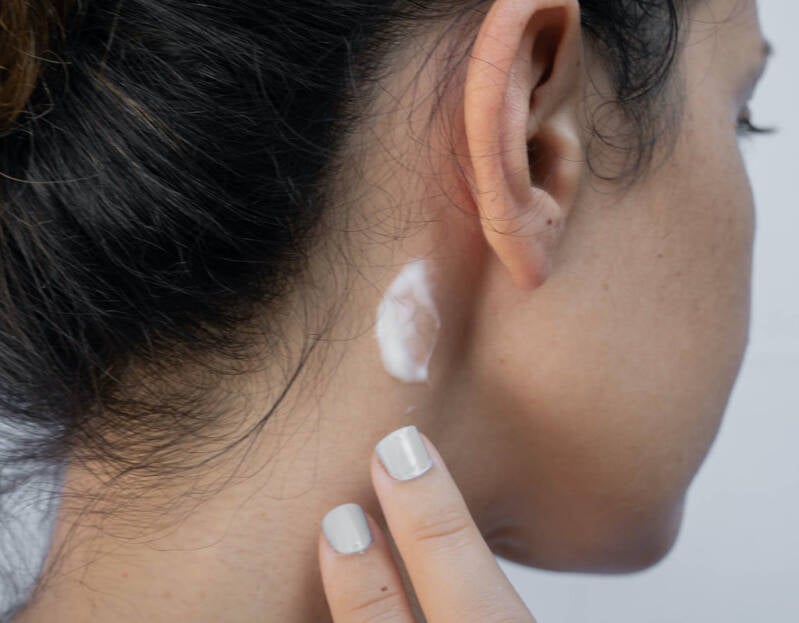
- Behind the ear (for facial products)
These areas provide a good indication of how your skin may respond without being highly visible.
How to Patch Test (Step-by-Step)
Step 1: Apply a Small Amount
Apply a small amount of the product to a clean patch of skin.
- Do not rub aggressively
- Leave the product in place
Step 2: Leave Undisturbed
Allow the product to remain on the skin.
- Do not wash the area immediately
- Avoid covering tightly unless testing a leave-on balm
Step 3: Wait 24 Hours
Monitor the area over a full 24-hour period.
Some reactions are delayed and may not appear within minutes.
Step 4: Reapply (Optional but Recommended)
For more accurate results, repeat the test once daily for 2–3 days in the same area.
This helps identify cumulative irritation.
What to Look For
Normal Response
- No visible change
- No discomfort
Mild Temporary Response
- Slight redness that fades quickly
- Minimal tingling that resolves
Reaction (Do Not Use)
- Persistent redness
- Itching
- Burning sensation
- Swelling
- Dry, tight, or irritated patch
If any of these occur, discontinue use.
Patch Testing Oil-Based and Balm Products
Oil-based and anhydrous products behave differently from water-based ones:
- They sit on the skin longer
- They release ingredients more slowly
- Reactions may be delayed
Because of this:
- Longer observation time is important
- Repeated application improves accuracy
Common Mistakes in Patch Testing
Testing Once and Assuming Safety
A single application may not reveal delayed reactions.
Washing the Product Off Too Soon
This prevents proper exposure and may hide potential reactions.
Testing on the Wrong Area
Highly resilient areas (like hands) may not reflect how more sensitive skin will react.
Applying Too Much Product
Patch testing requires a small, controlled amount.
Essential Oils and Patch Testing
Products containing essential oils should always be patch tested.
Even at low concentrations:
- Sensitivity varies between individuals
- Skin tolerance can change over time
Proper formulation reduces risk, but individual response cannot be predicted without testing.
What Patch Testing Does Not Do
Patch testing does not guarantee:
- Long-term tolerance
- Zero chance of irritation
It is a risk-reduction step, not a guarantee.
Conclusion
Patch testing is a simple but effective method to reduce the risk of adverse skin reactions.
Key points:
- Test before full use
- Use a small, controlled area
- Observe over time
- Repeat if needed
Consistent patch testing supports safer and more predictable skincare use.
FAQs
What is a patch test in skincare?
A patch test involves applying a small amount of a product to a limited area of skin to check for irritation or sensitivity before full use.
How long should you patch test a product?
At least 24 hours is recommended, with repeated application over 2–3 days for more accurate results.
Where is the best place to patch test?
Common areas include the inner forearm, inside of the elbow, or behind the ear for facial products.
Should natural skincare be patch tested?
Yes. Natural ingredients can still cause reactions depending on individual skin sensitivity and formulation.
Do essential oils require patch testing?
Yes. Products containing essential oils should always be patch tested due to variation in individual tolerance.
Add comment
Comments