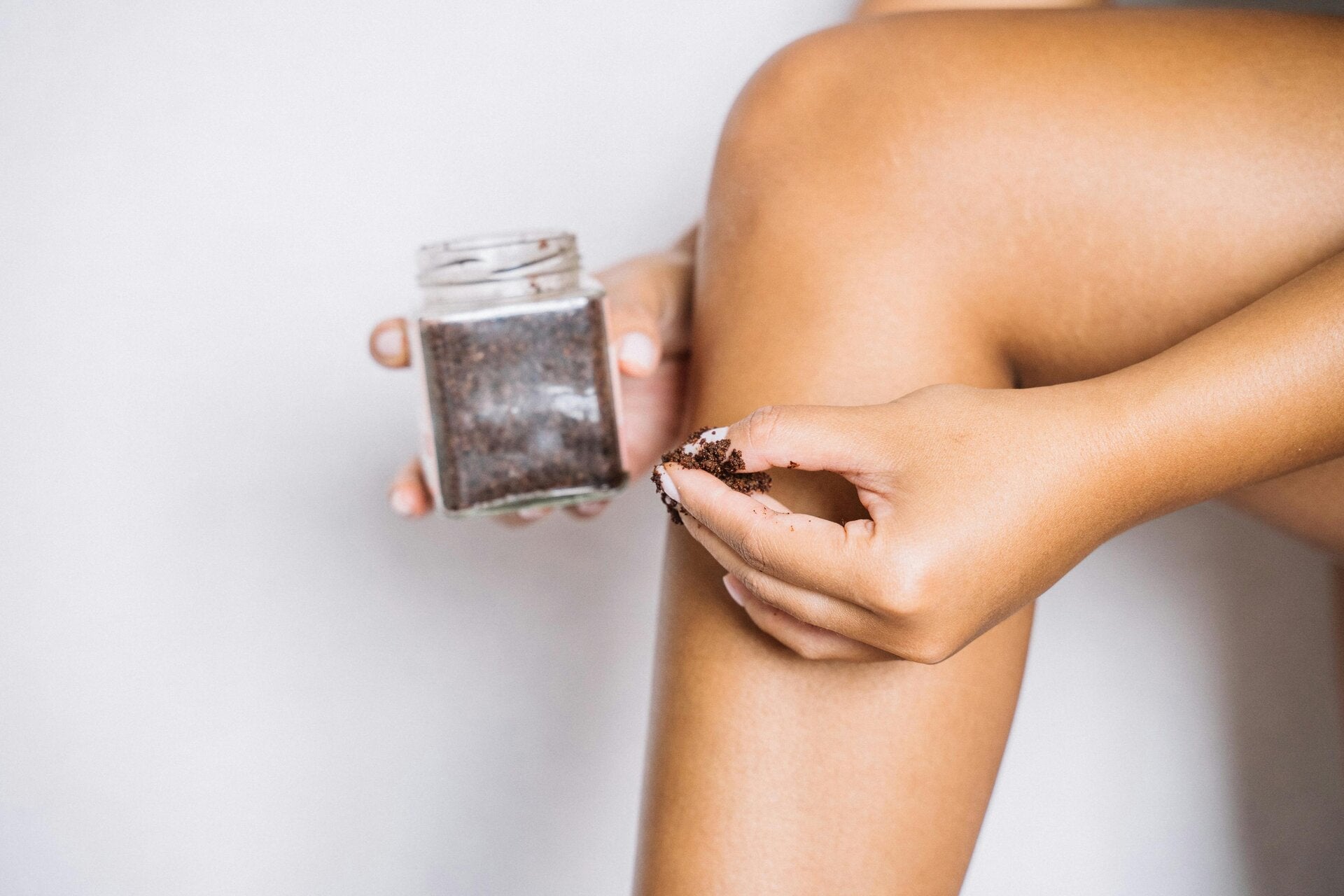
Coffee scrubs are widely used for exfoliation, but incorrect use can lead to irritation, dryness, or barrier disruption. The effectiveness of a coffee scrub depends less on the ingredient itself and more on how it is applied, how often it is used, and what follows after.
This guide outlines how to use a coffee scrub in a way that supports skin function rather than compromising it.
What a Coffee Scrub Does
Coffee scrubs function as physical exfoliants, removing excess dead skin cells from the surface layer (stratum corneum). When used correctly, this can:
- Improve skin texture
- Reduce buildup of dry or flaky skin
- Support more even application of oils and balms
They do not “detox” the skin or change its biology. Their role is mechanical and surface-level.
Step 1: Always Start With Wet Skin
Applying a coffee scrub to dry skin increases friction and the likelihood of irritation.
Water acts as a buffer by:
- Reducing drag between particles and skin
- Allowing smoother movement
- Distributing particles more evenly
Best practice:
- Apply in the shower or bath
- Ensure skin is fully wet before application
Step 2: Use Light Pressure
Pressure is one of the main causes of irritation.
Using excessive force:
- Increases abrasion risk
- Can disrupt the skin barrier
- Leads to redness and sensitivity
Correct technique:
- Use fingertips, not palms
- Apply gentle, circular motions
- Let the particles perform the exfoliation
If the skin feels sensitive during use, pressure should be reduced.
Step 3: Limit Time and Coverage
Exfoliation does not require prolonged contact.
- 20–30 seconds per area is sufficient
- Focus on areas prone to buildup (arms, legs, elbows)
- Avoid overworking the same area repeatedly
More time does not increase effectiveness but does increase irritation risk.
Step 4: Control Frequency
Using a coffee scrub too often is a common cause of barrier disruption.
Recommended frequency:
- 1–2 times per week for most skin types
Adjust based on:
- Skin sensitivity
- Climate (drier conditions may require less frequent exfoliation)
- Other exfoliating products in use
Signs frequency is too high:
- Persistent dryness
- Tight or “squeaky” feeling skin
- Increased sensitivity to products
Step 5: Rinse Thoroughly Without Over-Cleansing
After exfoliation:
- Rinse with lukewarm water
- Avoid harsh soaps immediately after scrubbing
Over-cleansing at this stage can:
- Remove protective lipids
- Increase transepidermal water loss (TEWL)
Step 6: Follow With Barrier Support
Exfoliation removes surface cells and temporarily increases exposure. Supporting the skin barrier immediately after is essential.
Apply:
- An emollient oil to soften and condition
- An occlusive balm to reduce water loss
This step helps:
- Restore lipid balance
- Reduce post-exfoliation dryness
- Maintain skin resilience
Areas to Avoid or Use With Caution
Coffee scrubs are typically designed for body use.
Use caution on:
- Face (thinner skin, higher sensitivity)
- Broken or inflamed skin
- Areas with active irritation
Always match the product to the intended use area.
Common Mistake: Using More for Faster Results
Increasing pressure, time, or frequency does not improve results.
Over-exfoliation can:
- Disrupt the barrier
- Increase sensitivity
- Lead to inconsistent skin texture
Consistency with correct technique is more effective than intensity.
Conclusion
Coffee scrubs can be effective and skin-compatible when used correctly.
Key factors:
- Wet skin before application
- Light pressure
- Controlled frequency
- Post-exfoliation barrier support
The outcome depends on method, not just the product.
FAQs
How often should you use a coffee scrub?
Most people should use a coffee scrub one to two times per week. More frequent use can disrupt the skin barrier and increase sensitivity.
Can coffee scrubs damage your skin?
Coffee scrubs can cause irritation if used with excessive pressure, on dry skin, or too frequently. Proper use significantly reduces this risk.
Should you use a coffee scrub on wet or dry skin?
Coffee scrubs should be used on wet skin to reduce friction and minimise irritation.
Do you need to moisturise after using a coffee scrub?
Yes. Applying an oil or balm after exfoliation helps restore the skin barrier and reduce water loss.
Can you use a coffee scrub on your face?
Most coffee scrubs are formulated for body use. Facial skin is thinner and more prone to irritation unless a product is specifically designed for facial exfoliation.